Friday, June 30, 2006

ADAVB supports Board Code on GA etc.

The ADAVB has written to the Dental Practice Board of Victoria today confirming that it supports the Board's revised draft Code of Practice on General Anaesthesia and Conscious Sedation. The short letter confirmed that no adverse comment had been received from members about the revised Code.
As there was effectively no submission on this occasion, no copy of the brief response to the Board is being published on the Branch website.

New AIHW report on Medical Indemnity

The Australian Institute of Health and Welfare (AIHW) has published a new report, Medical indemnity national collection (public sector): 2004-2005.

The report notes that over one third (34%) of all medical indemnity claims in the public sector arose as a result of a possible error or negligence in medical or surgical procedures. These claims included failure to perform a procedure, having the wrong procedure performed, having the wrong body site operated on or treated, post-operative complications and failure of a procedure.

'Other less common, but still significant, claims related to diagnosis (21%) and treatment (15%),' according to AIHW spokesperson Dr Samantha Bricknell.

'The three specialty areas with the greatest number of claims were obstetrics (18%), accident and emergency (15%) and general surgery (11%)', she said.
There were 137 dental claims representing only 2.1% of the total of 6453 claims. Of the dental claims, 87 were in connection with oral surgery.

Thursday, June 29, 2006

URGENT - Subscription reminder


Members are reminded that their membership subscriptions and insurance premiums (where appropriate) are due by 1 July. Invoices for renewals were all issued in early May.
Thank you to those members who have already paid.
If paying by mail, these should be sent today! If paying by credit card authorisation or B-Pay, this will need to be faxed by 5.oo pm on 1 July.
Membership queries should be addressed to the Accountant by phone on 9826 8318 or by email care of adavbinfo@adavb.com.au

Wednesday, June 28, 2006

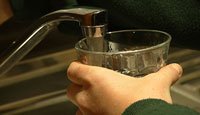
Gippsland to benefit from fluoridation

The residents of Morwell will benefit from a fluoridated drinking water supply from late June, Acting Chief Health Officer Dr John Carnie announced last week.
"The fluoridation of Morwell's drinking water supply by Gippsland Water will be followed by water supplies in Warragul, Moe, Sale and Traralgon from mid-July through to September," Dr Carnie said.
"Other residents in Gippsland who will benefit are connected to these water supply systems in Churchill, Newborough, Trafalgar, Traralgon South, Hazelwood North, Yallourn North, Yarragon, Yinnar, Buln Buln, Rokeby, Darnum and Nilma. Work is also underway to fluoridate drinking water supplies in Horsham, Wodonga and Wangaratta in the coming months," Dr Carnie said.
The media release also notes that there has been demonstrated support for fluoridation from local health services including West Gippsland Health Care Group, Latrobe Regional Hospital, Latrobe Community Health Service and Central Gippsland Health Service. The Central West Gippsland and East Gippsland Divisions of General Practice also support fluoridation.

Yass celebrates 50 years of fluoridation

On 21 June, NSW Minister for Health, John Hatzistergos today joined the local community of Yass, Yass Valley Council and the Australian Dental Association, in celebrating 50 years of fluoridation in NSW.

In the media release announcing the event, Mr Hatzistergos said "water fluoridation is a preventative oral health measure that can reduce dental decay in children by up to 60 per cent - it is endorsed by many peak bodies including the World Health Organization and supported by Australia's National Health and Medical Research Council".

The release also noted that as part of the $40 million oral health package announced in the 2006/07 Budget, the NSW Government will see:
  • $150,000 spent on fluoridation, giving 250,000 more people drinking fluoridated water
  • Lismore Council fluoridate their water, and
  • discussions underway with a further six councils to fluoridate their water by 2007-10.
"We will continue to fund 100 per cent of the capital cost associated with any council's decision to fluoridate its public water supplies," Mr Hatzistergos explained.

"This will result in 98 per cent of the NSW population drinking fluoridated water."

Mr Hatzistergos also thanked ADA (NSW Branch) for its production of a series of short videos focusing on the history and benefits of water fluoridation. "The DVD will be a useful educational tool for NSW Health, the University of Sydney, dental practitioners, and people accessing the ADA website", he said.

Tuesday, June 27, 2006

Submission re After Hours Service Code

The ADAVB has made a submission to the Dental Practice Board in response to their revised draft Code of Practice on After Hours Services.

Key points raised in that submission included:

  • the desirability of the Code and the Information Paper on advertising of dental services being linked as companion documents (like the dental records and infection control codes and information papers)
  • the need for clarification as to whether before and after photos constitute testimonials and are therefore in breach of Section 64 of the Dental Practice Act 1999
  • the desirability of State dental boards joining in an approach to the publishers of the Yellow Pages, to seek adjustment of the Dental Emergencies classification so that the public is not mislead about the services they might be able to obtain from laboratories and other establishments advertising in this area alongside dental practices.

New Dental School opened in Bendigo

The Parliamentary Secretary for Health, Daniel Andrews MP, yesterday officially opened the new dental school at the Bendigo campus of LaTrobe University.

There are 12 students currently enrolled in the first year of the 3 year Bachelor of Oral Health Science course, leading to registration as a dental therapist and dental hygienist. Numbers will increase each year until around 30 in each of the three years will see a total enrolment of approximately 90 students at the school.

Professor Hal Swerissen, LaTrobe's Head of School, School of Public Health, Associate Dean, Health Sciences, Bendigo and Professor of Public Health , welcomed around 60 guests to the opening, and introduced Mr Andrews. In his opening address, Mr Andrews noted the integration of the oral health science students with other health science students in nursing, physiotherapy and pharmacy courses, with a number of shared classes being taken. He also highlighted the significant shortfall in supply of dentists, dental therapists and dental hygienists in rural areas, and emphasised the Government's commitment to invest in measures that would help to address this problem - such as the new dental school.

Professor Mark Tennant, Head of the new Department of Oral Health (who is on part time secondment from the University of Western Australia), advised that the pre-clinical lab facilities that were being opened at the event would allow students to commence lab work in the next semester before they proceed to clinical placements based primarily at the Bendigo Health Care Group next year. An additional 10 chairs are being installed at the Bendigo Health Care Group clinic in Bendigo, taking their total to 19 chairs. This will be the largest Victorian dental training clinic outside the Royal Dental Hospital of Melbourne. Additional clinical placements are expected in other rural centres such as Echuca, Castlemaine and Kyneton.

Further information and a selection of images will be published when they become available.

Friday, June 23, 2006

Australia's Health 2006

The Australian Institute of Health and Welfare (AIHW) has published its annual omnibus report Australia's Health 2006 (note large file of 7.14 Mb), which contains a relatively short section on dental health (pp. 352-353), mainly based on the National Dental Interview Telephone Survey of 2002.
The report notes that "Our ranking among OECD countries has improved markedly for mortality rates from coronary heart disease, stroke, lung cancer and transport accidents. Our smoking rates have continued to fall, with the ranking improving from middle third to ‘best’ third. The ranking for lower alcohol consumption has also improved a little. The dental health of our 12 year olds is at the top of the ‘best’ third, along with mortality from accidental falls. And various measures of life expectancy and mortality place Australia among the best in the world" (p.2). (emphasis added)
Members with an interest in dental epidemiology and economics will find the statistical tables which appear on pages 423-424, 428, 430, 435-437, 439, 440, and 447 worth a look. Many of these tables contain more recent data, for example from 2003/04 hospital and health expenditure and insurance statistics. Some key figures of interest include the following:
  • In 2003/04, dental services accounted for 6.2% of health expenditure with $4.7 billion spent in a total of $75.8 billion recurrent expenditure
  • State and federal Governments contributed $723 million (15.4%), Health Insurance Funds contributed $708 million (15.08%), individuals paid $3,251 (69.26%) and other sources such as accident compensation bodies paid $12 million (0.26%) for dental services
  • In 2003/04, of the estimated $16.2 billion out of pocket expenditure on health care goods and services, 20.1% was spent on dental services
  • In 2003 there were 12,292 registered dental workers comprising 9,678 dental practitioners, 1,242 dental therapists, 577 dental hygienists and 795 dental prosthetists

Tuesday, June 20, 2006

New Council takes office

The new Branch Council took office at the end of the June General Meeting held at the ADAVB Offices last night.
The 17 members of the newly elected Council appointed Dr Greg Morris (pictured) as Branch President, and his fellow Executive members include Dr Mark Bowman (Vice President), Dr Neil Hewson (Honorary Secretary), Dr Stephen Cottrell and Dr Anne Stewart (Executive Officers) and Dr Chris Callahan (Immediate Past President).
Three Council members have retired after some years of service, namely Dr Suzanne Hanlin (President in 2004/05), Dr Vlad Hardi (President in 2003/04) and Dr Tim Cutler. These three Councillors were replaced by new members Dr Bob Cvetkovic, Dr Ming Ann Ong and Dr Gary Yip.
Other members of Council who continue in office for a further two year term concluding in June 2008 are: Dr Andrew Barnes, Dr Pamela Craig, Dr David Curnow, Dr Anne Harrison, Dr Matthew Hopcraft, Dr David Houghton, Dr John Matthews, and Dr Jonathan Tversky.
Council also re-elected the current three Federal ADA Councillors to represent the Victorian Branch members for the 2006/08 term, so that Dr John Matthews, Dr Neil Hewson and Dr David Houghton will once again perform these duties.

Tuesday, June 13, 2006

Drugs Poisons and Controlled Substances Regulations 2006

The Department of Human Services has confirmed that the new Drugs Poisons and Controlled Substances Regulations 2006 have now been made and replace the 1995 Regulations.

A copy of the Regulations can be downloaded from the Parliamentary website. Just click on the 'Victorian Statute Book' button, then select 'Victorian Statutory Rules' by title, and do an alphabetical search.

The Index reveals the following regulations which make specific mention of dentists and dental auxiliaries.

Dental auxiliaries (Reg's 5, 36, 39, 46, and 70)
Dentists
- dealings in drugs of dependence (Reg. 10)
- dealings in Schedule 3 poisons (Reg's 60,63)
- dealings in Schedule 4, 8, 9 poisons
emergency supply on oral instructions of (Reg's 27, 47)
labelling (Reg. 29)
orders for administration of (Reg. 46)
patient identity and therapeutic need for (Reg. 10)
permits required for Schedule 9 poisons (Reg. 7)
storage (Reg's 34-35)
- drugs, poisons dentists prohibited from dealing in (Reg's 23, 25)
- notice of drugs, poisons obtained fraudulently (Reg. 14)
- notice of loss, theft of poisons, substances (Reg. 70)

The Departmental website also contains additional information regarding requirements for health professionals.