Friday, April 28, 2006

Dental Records Code submission

Following feedback from a number of members regarding the Dental Practice Board of Victoria's revised draft Code of Practice on Dental Records, the Branch has now lodged a submission on behalf of the profession.
Members were sent an ADAVB Alert! (No.3/06) about this matter on 20 March 2006. If you wish to subscribe to ADAVB Alert! in order to stay in touch with key developments affecting your practice administration, click here.
More information about the DPBV's new Code is available here.

Thursday, April 27, 2006

Bone cancer story

A report on Channel 7 tonight dealt with an alleged link between osteosarcoma (bone cancer) and water fluoridation.
This story was apparently based on a report on the Environmental Working Group website. This in turn referred to an article by Dr Elise Bassins, based on her PhD thesis, which appeared in Cancer Causes and Control (2006) vol 17, p 421-428 "Age specific fluoride exposure in drinking water and osteosarcoma." Keywords: osteosarcoma, fluoride

The US Centres for Disease Control has recently published a statement on this research, which notes (inter alia):
"The principal investigator for the overall study cautions against over interpreting or generalizing the results of the Bassin analysis, stressing that preliminary analysis of a second set of cases does not appear to replicate the findings (Douglass et al., 2006). "
It further states:
"A number of studies regarding water fluoridation and osteosarcoma have been published in the past. At this time, the weight of the scientific evidence, as assessed by independent committees of experts, comprehensive systematic reviews, and review of the findings of individual studies does not support an association between water fluoridated at levels optimal for oral health and the risk for cancer, including osteosarcoma."
The American Dental Association had also previously published a statement about this article.
The Victorian Department of Human Services has now published a fact sheet on osteosarcoma.

Medibank Private selloff

The Commonwealth Government has announced that they intend to sell Medibank Private, and that this is to be accompanied by a restructure of basic cover.

A media release issued by Federal Health Minister, Tony Abbott MP advises changes that will see dentistry, physiotherapy, podiatry, psychology and other preventive care included in basic hospital cover.
From April 2007, health funds will be able to offer products that pay benefits for services that are part of, prevent, or substitute for hospital services. This will remove the current boundary that exists between “hospital” and “ancillary” insurance.
Marcus Wilson, a business analyst quoted in The Age this morning, say he expects "a private Medibank to negotiate more aggressively with private health providers".
It seems we may need to remind the community of remarks made to a Federal Parliamentary Committee (in 2003) by Professor John Deeble, one of the key architects of Medicare:
"The main problem with Medicare" (or any health insurance in our view) "covering the [dental] industry is its uninsurability.
... insurance works best for things that are episodic and unpredictable. Dental illness is slow: it is not episodic and it is not unpredictable, because you know you have it for quite a long time. You do not suddently discover that you have a dental problem. It should be treated, but it should not be treated within an insurance approach." (emphasis added)
Advice to members about the implications of these changes for their relationships with patients and delivery of dental services will be prepared and published as more details come to light.
Government information about their PHI industry reforms is available at http://www.health.gov.au/phi

Monday, April 24, 2006

Soft drink ban welcomed

The ADAVB has issued a media release this morning welcoming the announcement by Victorian Education Minister Lynne Kosky that high sugar drinks and other junk foods are to be banned from State school canteens and vending machines.
Our release also urges that "acidic soft drinks should be an occasional treat rather than a daily habit", recognising the addictive nature of some soft drinks.
Attached to the release is an Information Sheet which notes some key facts and issues, and which recommends further action to prevent dental decay and promote informed dietary choices.
The Age newspaper is running an online poll on the question "Do you support a ban on high sugar soft drinks at schools?" To record your support, visit The Age website.

Mouthguard promotion

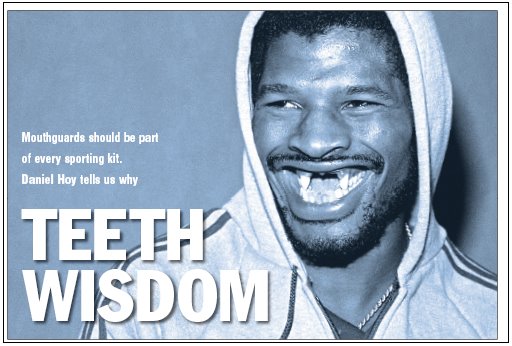
A story promoting mouthguard use appears on page 94 of the first edition of today's Herald Sun.

This appears as a result of an ADA Inc. media release highlighting why mouthguards should be part of every sporting kit, what kinds of mouthguards are recommended, and tips for their use and maintenance. Accompanying this material is a sidebar on what to do if a tooth is knocked out.

This substantial story is another successful ADA oral health promotion exercise.

Sunday, April 23, 2006

ALP Draft Election Platform

With the Victorian election scheduled for 25 November 2006, each of the major parties is progressively making their policy platforms visible to the community. Today's edition of The Sunday Age reports that the Victorian ALP has issued its ~200 page draft policy platform, called Rising to the Challenges in advance of the May State ALP Conference.
At the time of writing no copy of this document was available online, but we will publish a link as soon as it becomes available.
The Sunday Age reports that in the health section of the platform, the ALP commits "to reducing waiting times for emergency treatment, elective surgery and dental care".

Saturday, April 22, 2006

Regional press highlight waiting lists too

Yesterday's editions of the Geelong Advertiser, Bendigo Advertiser and Ballarat Courier all picked up the ADAVB's dental waiting list story, which has also been the subject of a media release by Hugh Delahunty MP, National Party Member for Lowan.
The Courier had already published a news story about their 53 month waiting times on Wednesday, but followed this with an editorial on Friday which supported the ADAVB call for further action to address the unacceptably long delays in access to dental treatment for people in the Ballarat area. The opinion piece included the following statement:
"The Australian Dental Association Victorian Branch President Dr Chris Callahan quite rightly argues patients deserve better access to dental treatment".
Mr Delahunty's release drew attention to our proposal for additional Commonwealth Supported Places (CSPs) for BDSc candidates at The University of Melbourne School of Dental Science:

"Other assistance could include additional funding for training opportunities and an expanded scholarship program for those prepared to work in regional areas. The Australian Dental Association estimates that Victoria needs at least 35 additional university places to address the current problems."

Friday, April 21, 2006

World No Tobacco Day kits now available

Victorian dentists can order free World No Tobacco Day/Campaign information kits from Quit Victoria. Simply click here to download the order form and then fax it back to Quit as soon as possible.
This year's World No Tobacco Day will be held as usual on May 31.

New ATO Guide on Service Trusts

Dentists, doctors and other professionals could lose tax benefits under a new Australian Taxation Office (ATO) Guide designed to prevent income splitting and passing profits to family members. This Guide, called Your Service Entity Arrangements, was published yesterday on the ATO website.

According to the ATO, the new Guide is intended "to help you ensure your business is claiming only deductible service fees and charges for your service entity arrangements".

The Guide indicates that service trust fees will only be deductible if businesses can show they are calculated from a practical and business point of view.

The fees charged back to the partnership for the services would also need to be at a commercial rate. A mark-up of 3-5 per cent would be regarded as acceptable. More than 30 per cent of profits going into the service trust, or amounts greater than $1 million, would be likely to result in ATO attention.

Members with service trusts are encouraged to talk with their accountants about the implications of the updated ATO position.

Thursday, April 20, 2006

Age Editorial supports ADAVB message

Following ADAVB media releases regarding dental waiting times of up to five and a half years for public patients in some parts of the State, The Age today published an editorial article 'Time to tackle the decay in dental services'.

The Age opinion piece concludes as follows: "It is time to stop buck-passing and for federal and state governments both to play their part in providing a service capable of meeting public dental needs".

This editorial follows publication of two articles yesterday:
Dentists shortage means five-year waits; and
Three years to see a dentist.

Wednesday, April 19, 2006

Waiting list update

The ADAVB issued two media releases yesterday regarding dental waiting times for public dental patients in Melbourne and in rural Victoria, which have received extensive print media and radio coverage across the State and indeed in other States also. Branch President Dr Chris Callahan has done 11 interviews, and our media monitoring suggests that the story has appeared in over 30 media outlets so far. These stories have emphasised that waiting times at some rural clinics are longer than 5 years, while there are still metropolitan clinics where waiting times longer than three years apply.
The information in the releases was compiled from information published last week under the Your Hospitals section of the Department of Human Services website. Dental waiting times (as at December 2005) are only available after navigating through about four further screens of information. If you don't know where to look, this information is hard to find.
The Department does not publish a summary of waiting times for all public clinics, making it a chore to load the individual waiting times for around 60 clinics across the State. Our releases include a summary table which shows the waiting times that were published by the Department in 2002, 2003 and 2005.

Tuesday, April 18, 2006

Hospital opens new dental GA facility

Sir John Monash Private Hospital has opened a dedicated dental treatment room. The service provides general anaesthetics for paediatric and adult patients. An anaesthetist is available most days.
The hospital says that the room is currently running at about at 35 per cent utilisation.
The creation of the new service follows the closure of Dandenong Surgicentre, resulting in ADAVB members requesting to use the Sir John Monash Private Hospital facilities. The Dandenong facility had been used by around 260 dentists.

Changes to WorkChoices Record Keeping Rules

To address concerns regarding the impact of the record keeping rules, while ensuring that lower income workers are protected, the Minister for Workplace Relations, The Hon Kevin Andrews announced today that Regulations will be amended so that employers will be required to keep records relating to:-
> the total number of hours worked by an employee where the employee earns an annual salary of less than $55,000 (* this amount will be indexed); and
> daily start and finish times where overtime is payable to the employee under an industrial instrument (e.g. an AWA) or a common law contract.

This means that where an employee earns $55,000 or more per year and is engaged under an instrument that does not provide for overtime there will be no requirements on employers to keep records relating to hours worked for that employee.

Record keeping requirements will now apply as follows:
  • Where an employee has provisions for overtime and is paid an annual salary of less than $55,000* employers would be required to keep records of starting and finishing times and total hours worked.
  • Where an employee has provisions for overtime and is paid an annual salary of $55,000* or more employers would be required to keep records of starting and finishing times.
  • Where an employee has no provisions for overtime and is paid an annual salary of less than $55,000* employers would be required to keep records of total hours worked.
  • Where an employee has no provisions for overtime and is paid an annual salary of $55,000* or more, there would be no record keeping requirements under Regulation 19.9.

The ADAVB will publish formal record keeping requirements once the Regulations have been finalised.

Las Vegas beckons

Las Vegas will be the site of the American Dental Association's 2006 ADA Annual Session. The conference will be held from October 16–19, 2006 at the Mandalay Bay Resort. The ADA Annual Session features the largest marketplace exhibition in the USA along with over 260 programs and workshops to choose from. Members planning to attend the conference will need to contact the Dental Practice Board of Victoria to arrange for the accreditation of continuing professional development hours.

Tuesday, April 11, 2006

Discussion Paper re University Reforms

The Federal Minister for Health, The Hon Julie Bishop MP, recently launched a discussion paper entitled "The Bologna Process and Australia: Next Steps".

The Bologna Process currently involves 45 European countries working towards greater consistency and portability across their higher education systems. It was this process that provided the model for the proposed double degree for dentistry at The University of Melbourne (on which the ADAVB has lodged an opposing submission).

The discussion paper seeks feedback on the significance of Bologna for Australia and possible Australian responses, with submissions due to quality@dest.gov.au by 30 April 2006.

As this is a Commonwealth initiative, the ADA Inc. will be preparing the dental profession's submission on this, and to facilitate that process, the ADAVB invites members to forward comments and suggestions to me for compilation into a Victorian perspective which can inform the national position.

Indigenous health survey released

A national health survey of Aboriginal and Torres Strait Islander people found that they were more likely to have consulted health professionals - other than doctors or dentists - than other Australians. In remote areas, Aboriginal health care workers were consulted by 13% of the population.

More than one-in-10 (11%) Indigenous Australians aged 15 years and over had never visited a dentist - or other health professional - about their teeth. In remote areas almost a quarter had never visited a dentist, according to the Australian Bureau of Statistics survey.

The State Government has announced a four-year $7 million partnership between Victorian health services and the Aboriginal community. The Government says the partnership aims to improve clinical care for Aborginal Victorians and co-ordinate approaches to health promotion planning, implementation and evaluation.

NSW Crackdown on unregistered health practitioners

Unregistered health practitioners will be the target of a new crackdown by the NSW Government.
In a media release announcing this initiative, NSW Minister for Health John Hatzistergos said "the NSW Government is also clamping down on doctors and other registered health providers who have been struck off for unprofessional behaviour or misconduct but continue to work in other related (unregulated) health services"

The Health Care Complaints Commission (HCCC) will be given a range of powers to get tough on unregistered health practitioners including counsellors and psychotherapists, massage therapists, naturopaths and herbalists as well as Reiki therapists and homeopaths.

The HCCC will have the authority to:
> Black-ban unregistered practitioners
> Publicly name and shame unregistered practitioners
> Carry out tougher, wide-sweeping investigations of unregistered health practitioners
> Enforce its own disciplinary action against unregistered practitioners

Mr Hatzistergos said that as part of the new crackdown, a code of conduct will also be introduced for unregistered healthcare practitioners. "In addition we are placing restrictions on doctors and other health providers who have been struck off the register for unprofessional behaviour or misconduct," he said.

Disciplinary tribunals will now have the power to ban these people from practicing in any health related field. A draft Bill will be released shortly for consultation with stakeholders.

Monday, April 10, 2006

Convention registrations

Following the closure of the early bird registration period on 7 April, the 2006 Convention (26-27 May) now has over 480 members registered to attend. With an overall limit of 600, only about 100 seats remain at the full ticket price.

The Dental Assistant Convention has also been popular, with over 180 registrations so far for this one day program on 27 May.

If you plan to attend, we suggest you register promptly (use the link at the foot of our Homepage or in the sidebar below), because the "sold out" sticker is not far off.

Government response to Report on Regulatory Burdens

The Australian Government has announced immediate actions to address a number of the recommendations of the Report of the Taskforce on Reducing the Regulatory Burdens on Business – Rethinking Regulation.
One of the measures is intended to help small businesses to make better use of WorkChoices legislation. This sees the halving of incorporation fes for small businesses from $800 to $400.

Friday, April 07, 2006

New Health Inequalities Report

Disadvantaged groups experience more severe and more long-term health problems than other Australians, according to a report released jointly by the Queensland University of Technology (QUT) and the Australian Institute of Health and Welfare (AIHW).

The report, Health Inequalities in Australia: morbidity, health behaviours, risk factors and health services use, looks at where people live, their income, education and occupation, and finds that being disadvantaged puts people at much higher risk for health problems.

The report found that people living in the most disadvantaged areas visited the G.P. more often than other Australians, but made significantly fewer visits to dentists or medical specialists.

Thursday, April 06, 2006

Dental health impacts on working poor - report

Low pay narrows and constricts workers ability to access basic health, including dental services. This is a finding from research investigating the experiences of low paid workers in Australia.

Funded by the Australian Research Council, unions and the Brotherhood of St Laurence, the report examines the effects of low pay on workers and their households.

Interviews and focus groups with low paid workers earning less than $500 per week, $14 per hour or $26,700 per annum were conducted by leading social researchers from four universities.

Paula, a 55-year-old single mother of two, who has two cleaning jobs said: “ … I haven’t gone to the dentist. I have to go. I’m thinking I have to go but (I’m) scared to go in case he finds something I can’t afford”.

The paper concluded: “For these workers, low pay narrows and constricts their social circles, restricts travel, and affects children’s access to school excursions and basic health – including dental – services. Working poverty is associated with the deferral of family information and relationship tensions around money in some households”.

Wednesday, April 05, 2006

Land Tax for Trusts - Guide and FAQ

The Victorian State Revenue Office (SRO) has published new resource materials to assist those who are subject to their new approach to land tax for trusts that will apply from the 2006 tax year onwards.

The SRO has also developed a Practitioner's Guide for use by Trustees and their advisors. A set of Frequently Asked Questions (FAQ's) are also provided. A Media Release was announced on March 30, 2006.

Tuesday, April 04, 2006

Three month jail sentence

Judge S Davis, Vice President of the Victorian Civil and Administrative Tribunal (VCAT) today sentenced Dr George Varnavides to prison for a term of three months for contempt of VCAT's earlier prohibition against practicing for a specified period. Dr Varnavides was also ordered to pay costs.
Click here to review the Order and the Reasons for this decision.
The Order was stayed for a period of 14 days to provide opportunity for appeal should Dr Varnavides wish to make such an application.

New Joint ANZ Therapeutic Products Authority

Steps towards the establishment of a new joint agency called the Australia New Zeaand Therapeutic Products Authority (ANZTPA) have been announced by the Australian Department of Health and Ageing.

ANZTPA will be a joint, trans-Tasman agency with responsibility for regulating therapeutic products across both countries. When established, it will replace Australia’s Therapeutic Goods Administration (TGA) and the New Zealand Medicines and Medical Devices Safety Authority (Medsafe).

The transitional director of the Joint Agency Establishment Group for the ANZTPA, Philip Davies, said that consulting widely with industry, consumers and other interested parties was a key priority of both governments in the development of the new Authority.

"Industry needs to have every opportunity to review and comment on the details of the new regulatory system and time to put in place appropriate transitional arrangements, including staff training," Mr Davies said.

"Equally, consumers and their health practitioners in both countries need to feel assured that any new regulatory system will continue to protect their health and well being and we expect that consumer groups will welcome the opportunity to attend the proposed consultation sessions to gain information and to make comment."

More information about the proposed Australia New Zealand Therapeutic Products Authority (ANZTPA) and the consultation schedule can be found on www.anztpa.org

Recent ARCPOH Reports

Monday, April 03, 2006

NSW Parliamentary Inquiry reports on Dental Services

The final report of a NSW Legislative Council Inquiry into Dental Services in NSW was published on 31 March. The Report highlights a growing crisis in provision of public dental care, with funding of NSW services the lowest in Australia on a per capita basis.
In the Chair's Foreword to the Report, Jan Burnswoods MLC states:

"To provide more comprehensive public dental services the Committee makes a range of recommendations, on the premise that sufficient funding to implement such recommendations must be made available. The Committee emphasises the need for both the Commonwealth and State Governments to provide additional funding for dental services, and examines Commonwealth incentives on private health insurance and the possible extension of Medicare.
The Committee has heard that access to public dental services is affected by unmanageable waiting lists, difficulties in accessing treatment, particularly in rural and remote areas, and a shortage of dental practitioners working in public dentistry. The quality of care that public dentistry staff can provide to patients is affected by time constraints due to the large number of patients requiring treatment and the resources available in public dental clinics. The Committee has made recommendations addressing each of these issues, with a view to ensuring that public dental services are sufficiently staffed and resourced to provide an adequate level of care.
The Committee learnt that the demand for both private and public dental practitioners is predicted to increase in the next ten years and has therefore made recommendations on issues pertaining to the dental workforce and the education and training of dental practitioners.
Dental disease is largely preventable and the Committee recognises that greater awareness of the importance of oral health needs to be generated through targeted education campaigns, similar to the ‘Slip, Slop, Slap’ campaign. The Committee also recommends that educative programs should be run through schools and early childhood health centres. The Committee received a large amount of evidence on the issue of fluoridation as a preventive measure, and sets out the arguments for and against fluoridating public water supplies."